
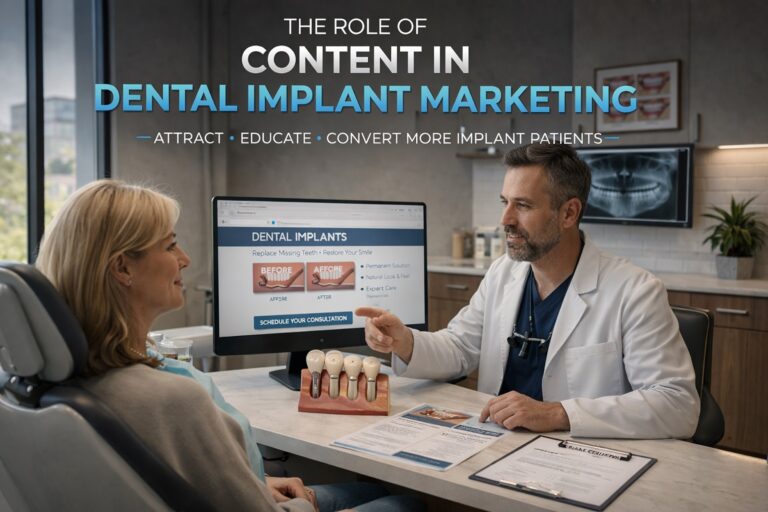
Content plays a central role in dental implant marketing by directly influencing patient acquisition, case acceptance, and long-term revenue growth. For implant dentists, the difference between inconsistent leads and a steady flow of high-value cases often comes down to how well your content educates, builds trust, and converts visitors into patients.
Most implant practices are not struggling because of a lack of clinical skill. They struggle because their marketing content does not align with how patients search, evaluate, and choose providers. When content is structured strategically across your website, SEO, and lead generation systems, it becomes one of the most powerful drivers of implant case volume.
Why Content Matters More for Dental Implants
Dental implants are a high-consideration treatment. Patients are not making quick decisions. They are researching, comparing providers, and evaluating risks before ever calling your office.
Content bridges the gap between initial search and final consultation.
Unlike general dentistry, implant patients want detailed answers to questions like:
- Am I a candidate for implants?
- How much do implants cost?
- What is the recovery time?
- What are the risks?
- Why should I choose this doctor?
If your website does not answer these questions clearly, patients will move on to a competitor who does.
High-performing content does three things:
- Attracts qualified traffic through search engines
- Educates patients to reduce hesitation
- Builds trust before the consultation
When these elements are aligned, you see higher conversion rates and stronger case acceptance.
Content as the Foundation of Dental Implant SEO
Search engine visibility for implant-related keywords depends heavily on content quality, structure, and relevance. Technical SEO matters, but content is what drives rankings and traffic.
A well-optimized content strategy supports your dental implant SEO efforts by targeting high-intent search terms such as:
- “full mouth dental implants near me”
- “all-on-4 cost in [city]”
- “best implant dentist in [city]”
- “are dental implants painful”
To compete for these searches, your site needs more than a single service page.
Core Content Types That Drive Rankings
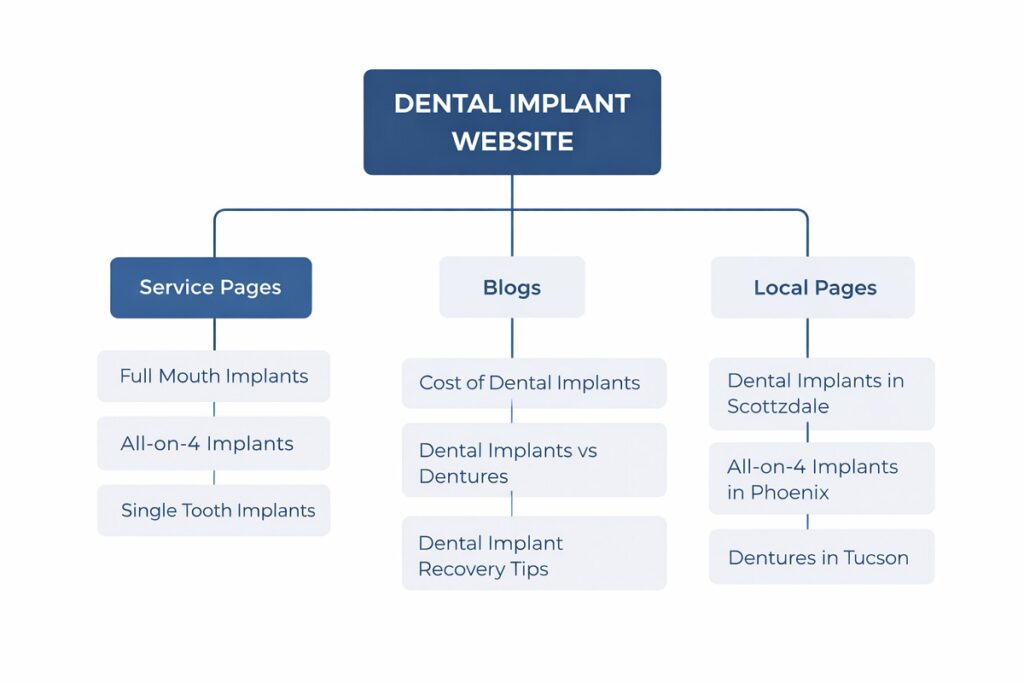
Your SEO strategy should include:
- Implant service pages for each major procedure
- Location-specific pages for local visibility
- Educational blog content targeting common questions
- Case studies and before-and-after content
- FAQ sections that match search intent
Each piece of content should be mapped to a specific keyword cluster and user intent.
Content Depth and Authority
Google prioritizes websites that demonstrate topical authority. This means your content should cover implant topics comprehensively rather than superficially.
For example, instead of a short page on “All-on-4 implants,” a high-performing page would include:
- Procedure overview
- Candidacy criteria
- Cost ranges
- Recovery timeline
- Risks and benefits
- Before-and-after examples
- FAQs
This level of depth improves rankings and keeps patients engaged longer on your site.
To build this type of structure effectively, your practice needs a strong foundation in dental implant SEO.
How Content Impacts Patient Conversion Rates
Traffic alone does not grow your practice. Conversion is where content becomes a revenue driver.
When a patient lands on your website, they are evaluating:
- Credibility
- Clarity
- Trustworthiness
- Ease of taking the next step
Content influences each of these factors.
Key Conversion-Focused Content Elements
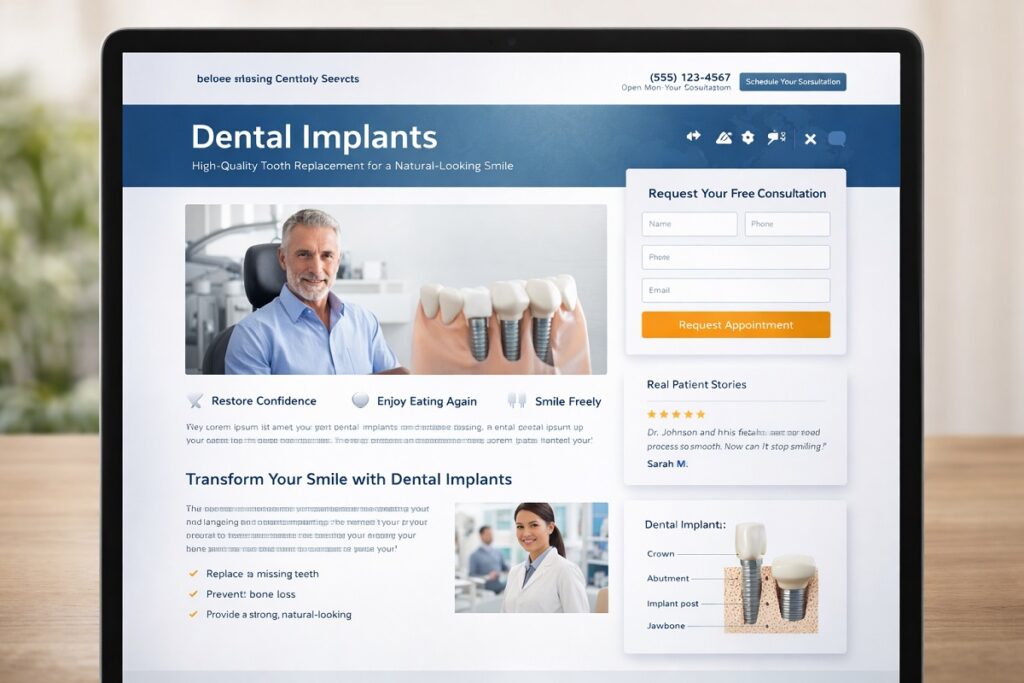
High-converting implant websites consistently include:
- Clear explanations of procedures in plain language
- Visual proof such as before-and-after cases
- Doctor credentials and experience
- Transparent discussion of costs or financing
- Strong calls to action
If your content is vague, overly clinical, or incomplete, patients hesitate to contact you.
Reducing Friction in the Decision Process
Implant patients often delay treatment due to uncertainty. Content reduces that friction by answering objections before they arise.
Common objections include:
- Fear of pain
- Cost concerns
- Uncertainty about results
- Lack of trust in the provider
Strategic content addresses these directly, which leads to:
- More consultation requests
- Higher-quality leads
- Better case acceptance rates
This is why your dental implant website design should prioritize content clarity and structure from the start:
dental implant website design
Local SEO and Content for Implant Dentists
Most implant cases come from local searches. Patients are looking for providers in their area, and your content must reflect that.
Local SEO is not just about your Google Business Profile. It relies heavily on location-specific content across your website.
Local Content That Drives Visibility
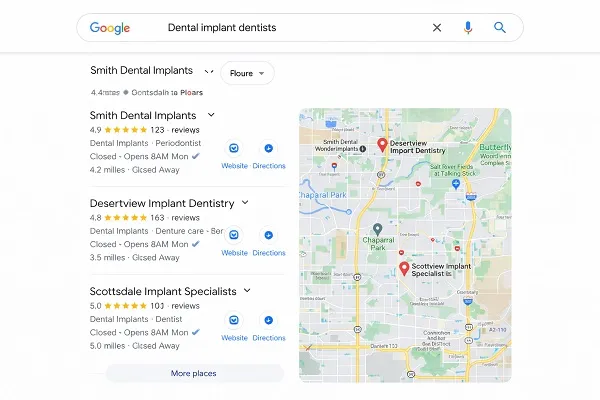
To improve rankings in your area, your content strategy should include:
- City-specific implant pages
- “Near me” keyword targeting
- Local case studies
- Community-focused blog content
For example, instead of one general implants page, you might have:
- “Dental Implants in Denver”
- “All-on-4 Implants in Glendale”
- “Full Mouth Implants Near Cherry Creek”
Each page should include localized signals such as:
- City references
- Local patient testimonials
- Geographic keywords
Building Local Authority Through Content
Consistency is key. Google looks for strong alignment between your website content, business listings, and local signals.
When done correctly, content helps you:
- Rank in the map pack
- Increase visibility for high-intent searches
- Attract patients within your service area
A focused strategy around local SEO for implant dentists ensures your content supports local rankings effectively.
Content and Implant Lead Generation Systems
Content does not operate in isolation. It plays a critical role in your lead generation funnel.
Every piece of content should guide patients toward a specific action.
The Content Funnel for Implant Patients
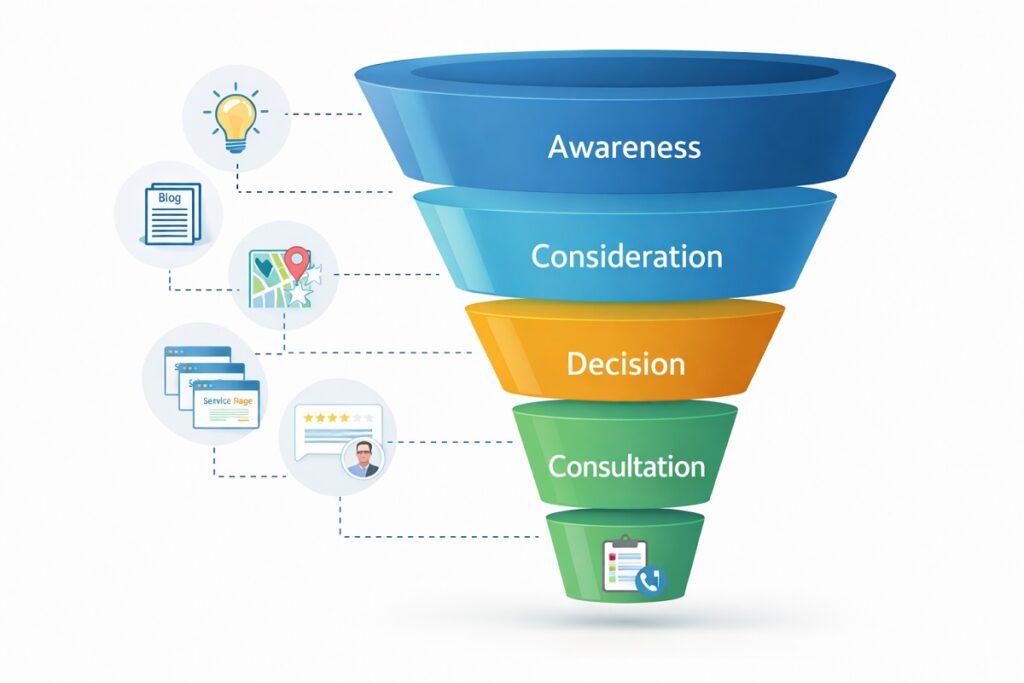
An effective funnel includes:
Top of funnel content
- Educational blog posts
- Common question articles
- Awareness-focused topics
Middle of funnel content
- Detailed procedure pages
- Cost breakdowns
- Comparison content
Bottom of funnel content
- Case studies
- Testimonials
- Consultation-focused pages
Each stage supports the next, moving patients closer to booking.
Converting Traffic Into Qualified Leads
Content supports lead generation by:
- Capturing attention through search
- Building trust through education
- Encouraging action through clear calls to action
High-performing practices often integrate:
- Landing pages for implant offers
- Lead forms with clear incentives
- Financing information
- Consultation scheduling tools
To maximize results, content should be aligned with proven implant lead generation strategies.
Using Content to Improve Case Acceptance
Content does not stop working once a patient contacts your office. It also plays a role in case acceptance.
Patients often continue researching after their consultation.
If your online content reinforces what they learned in person, they are more likely to proceed with treatment.
Pre-Consultation Content
Before the visit, content helps patients feel prepared and confident.
Examples include:
- “What to expect during your implant consultation”
- “How to prepare for implant surgery”
- Financing and payment options
Post-Consultation Reinforcement
After the consultation, content should:
- Reassure patients about their decision
- Address lingering concerns
- Reinforce trust in your expertise
This can include:
- Follow-up emails with educational content
- Links to case studies
- Patient testimonials
Reputation and Follow-Up Content
Reviews and follow-up communication are extensions of your content strategy.
A strong system for reputation follow-up ensures that satisfied patients share their experiences, which then becomes powerful content for future prospects.
Common Content Mistakes That Limit Implant Growth
Many implant practices invest in marketing but fail to see results because of weak content execution.
1. Thin or Generic Content
Short, surface-level pages do not rank or convert well. Patients want depth and clarity.
2. Overly Technical Language
Patients are not clinicians. Content should be clear, simple, and easy to understand.
3. Lack of Clear Calls to Action
If patients do not know what to do next, they leave.
4. No Local Focus
Generic content without geographic targeting limits visibility in local searches.
5. Poor Content Structure
Disorganized pages reduce readability and hurt user experience.
Fixing these issues often leads to immediate improvements in both traffic and conversions.
Aligning Content With Real Patient Search Behavior
Understanding how implant patients search online is critical.
Most journeys begin with a problem, not a procedure.
Patients search things like:
- “teeth replacement options”
- “how to fix missing teeth permanently”
- “best solution for missing teeth”
Your content should capture these early-stage searches and guide patients toward implants.
Matching Content to Intent
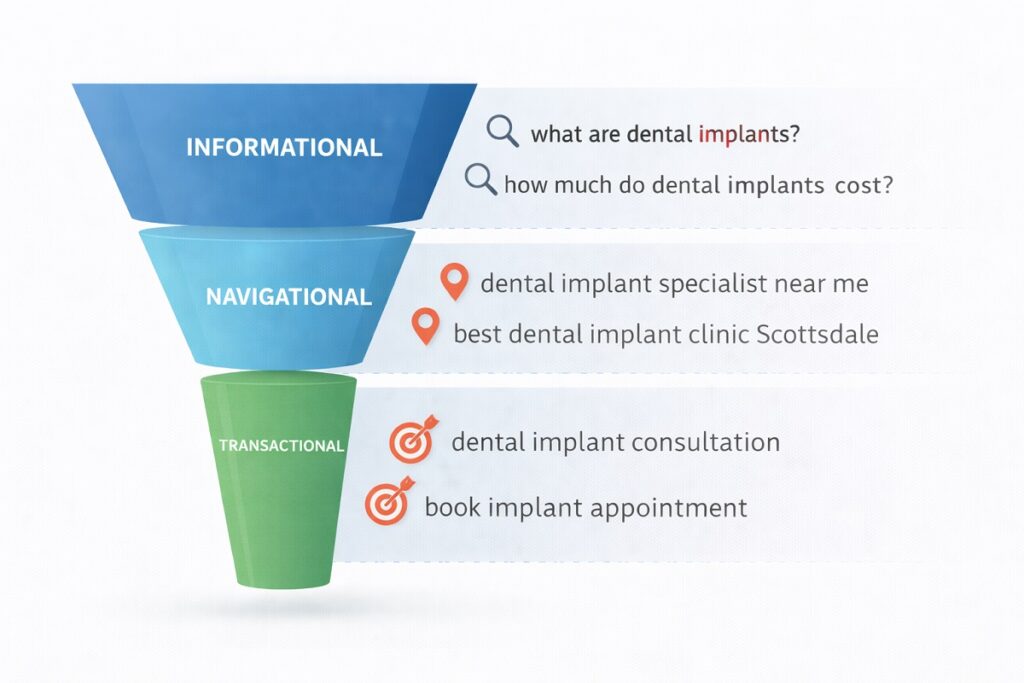
Each keyword reflects a specific intent:
- Informational intent
- Comparison intent
- Transactional intent
Your content should align with each stage rather than focusing only on bottom-of-funnel keywords.
Content Clusters and Topic Authority
Instead of isolated pages, your site should use content clusters.
For example:
Core page: Dental Implants
Supporting content:
- Implant cost guide
- Implant vs dentures comparison
- Implant recovery timeline
- Implant candidacy checklist
This structure improves rankings and keeps users engaged longer.
How Implant Dentists Can Improve Their Marketing
To improve results, implant dentists need to treat content as a strategic asset rather than an afterthought.
Start by evaluating your current website:
- Are your implant pages detailed and patient-focused?
- Do you rank for local implant keywords?
- Are visitors converting into leads?
- Do you have consistent content supporting your funnel?
Then implement these improvements:
- Expand service pages with deeper, patient-focused content
- Add location-based pages for key areas you serve
- Create blog content targeting real patient questions
- Improve calls to action across all pages
- Align content with your lead generation systems
Most importantly, ensure your content works together with your website, SEO, and advertising efforts.
When content, SEO, and conversion strategy are aligned, practices typically see:
- Increased implant case volume
- Higher-quality leads
- More consistent patient flow
Ready to Grow Your Dental Implant Practice?
If your content is not generating consistent implant cases, it is time to take a more strategic approach.
Parrot Branding specializes in helping implant dentists grow through high-performance websites, SEO, and lead generation systems designed specifically for dental implants.
Request a consultation to see how your content strategy can drive more qualified implant patients:
Content reviewed and published by Parrot Branding Editorial Team.