
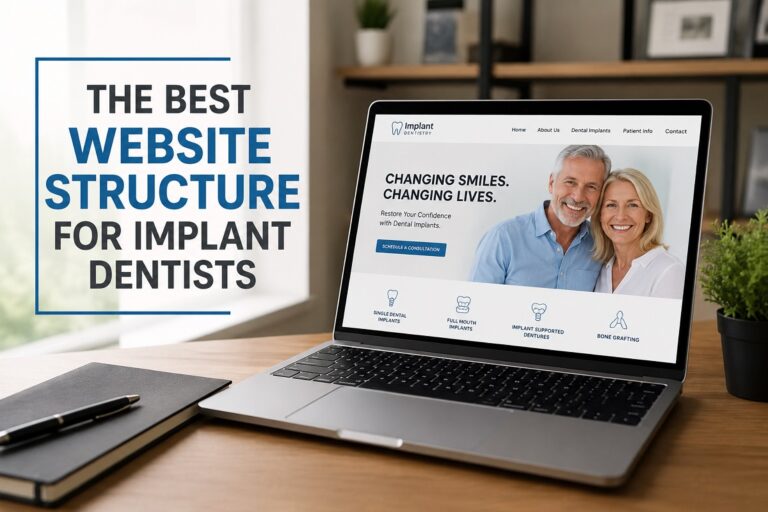
A well planned website structure for implant dentists helps patients find the information they need while making it easier for search engines to understand and rank your website. The best website structure for implant dentists supports both user experience and SEO by guiding visitors through the treatment process, answering common questions, and encouraging them to schedule a consultation. A properly organized dental implant website can also increase conversion rates by building trust and making important information easy to access.
Start with a Clear Homepage Focus
Your homepage should immediately communicate that your practice specializes in dental implants. Visitors should understand within seconds what services you provide and why they should choose your practice.
Include a concise introduction, an overview of your implant services, and clear calls to action such as scheduling a consultation or requesting more information.
The homepage should also feature:
- Dental implant treatment highlights
- Before and after patient results
- Patient testimonials
- Financing information
- Links to your primary implant service pages
- Contact information and appointment buttons
- Trust badges and professional affiliations
A homepage that is focused on implant dentistry helps improve keyword relevance while providing a better user experience.
Organize Implant Services into Dedicated Pages
One of the biggest SEO mistakes is placing every implant treatment on a single page. Instead, each major treatment should have its own optimized page targeting specific search terms.
Examples include:
- Single Dental Implants
- Multiple Dental Implants
- Full Mouth Dental Implants
- All on 4 Dental Implants
- Implant Supported Dentures
- Bone Grafting
- Sinus Lift Procedures
- Tooth Extractions Before Implants
Dedicated pages allow each treatment to rank for its own keywords while giving patients detailed information about their specific needs.
Build Strong Service Page Content
Every implant service page should answer the questions patients commonly ask before booking an appointment.
Include sections covering:
Treatment Overview
Describe the procedure in simple language while naturally incorporating relevant dental implant keywords.
Benefits
Explain how the treatment improves:
- Appearance
- Chewing ability
- Comfort
- Bone preservation
- Long term oral health
Who Is a Good Candidate
Help visitors determine whether the treatment may be right for them by discussing common qualifying factors.
Treatment Process
Walk patients through each step of the procedure so they know what to expect from consultation through recovery.
Recovery Information
Answer common concerns about healing time, discomfort, aftercare, and follow up appointments.
Frequently Asked Questions
Including FAQs helps capture long tail search traffic while reducing patient uncertainty.
Create Supporting Educational Pages
High quality educational content strengthens topical authority and improves SEO.
Useful pages include:
- Dental Implant Cost
- Implant Financing Options
- Dental Implant Recovery Timeline
- Dental Implant Maintenance
- Implant Success Rates
- Dental Implant vs Bridge
- Dental Implant vs Denture
- Common Implant Myths
- What to Expect During Consultation
These pages attract informational searches while naturally linking visitors toward treatment pages.
Use a Logical Navigation Menu
Visitors should be able to find important information without searching through multiple menus.
A simple navigation might include:
- Home
- Dental Implants
- Implant Treatments
- Before and After
- Patient Reviews
- Financing
- About the Practice
- Meet the Dentist
- Blog
- Contact
Avoid overcrowding the navigation with too many options. Simple navigation improves both usability and SEO.
Create a Dedicated Dental Implant Hub
Instead of treating implant pages as isolated content, organize them under a main dental implants section.
Example structure:
Dental Implants
- Single Dental Implants
- Multiple Dental Implants
- Full Mouth Dental Implants
- All on 4 Dental Implants
- Implant Supported Dentures
- Dental Implant Cost
- Implant Recovery
- Implant FAQs
This hierarchy helps search engines understand the relationship between pages while improving internal linking.
Strengthen Internal Linking
Internal links help distribute authority across your website and improve crawlability.
Examples include:
- Link treatment pages to financing pages.
- Link recovery articles back to treatment pages.
- Connect comparison articles with relevant services.
- Link patient testimonials to treatment pages.
- Connect blog articles with primary implant services.
Strong internal linking also encourages visitors to explore additional pages, increasing time on site.
Build Local SEO into the Structure
Most implant patients search for providers within their local area.
Include location signals naturally throughout the website.
Examples include:
- City names within page titles
- Service area pages
- Local patient testimonials
- Google Maps integration
- Practice address
- Local business schema
- Nearby landmarks where appropriate
If your practice serves multiple cities, create unique location pages instead of duplicating content.
Include Strong Trust Building Pages
Dental implant treatment often represents a significant financial investment, so trust is critical.
Important pages include:
Meet the Implant Dentist
Highlight:
- Education
- Implant training
- Certifications
- Years of experience
- Professional memberships
Patient Reviews
Include authentic testimonials discussing:
- Results
- Comfort
- Communication
- Overall experience
Before and After Gallery
Visual proof often influences patient decisions more than written descriptions.
Organize galleries by treatment type whenever possible.
Optimize URLs
Simple URLs improve both user experience and SEO.
Good examples:
yourwebsite.com/dental-implants
yourwebsite.com/all-on-4-dental-implants
yourwebsite.com/full-mouth-dental-implants
yourwebsite.com/dental-implant-cost
Avoid long URLs containing unnecessary words or numbers.
Make Every Page Conversion Focused
Each page should encourage visitors to take the next step.
Include calls to action throughout the page rather than only at the bottom.
Examples include:
- Schedule Your Consultation
- Request a Free Implant Evaluation
- Call Our Office Today
- Check Financing Options
- View Before and After Photos
Patients often decide to contact your office after reading only part of a page, so multiple calls to action increase conversions.
Improve Mobile Navigation
Most patients researching dental implants use smartphones.
Ensure your mobile navigation:
- Loads quickly
- Uses large clickable buttons
- Keeps menus simple
- Displays phone numbers prominently
- Makes appointment scheduling easy
A mobile friendly structure also supports Google’s mobile first indexing.
Add a Comprehensive FAQ Section
Rather than creating one large FAQ page, place relevant questions throughout the website.
Examples include:
On treatment pages:
- Does getting dental implants hurt?
- How long does surgery take?
- How long do implants last?
On financing pages:
- Do you offer payment plans?
- Does insurance cover implants?
On recovery pages:
- What foods can I eat?
- When can I return to work?
This approach provides more relevant information while increasing keyword coverage.
Support SEO with a Well Organized Blog
A blog should support your implant service pages rather than covering unrelated topics.
Content ideas include:
- Signs You May Need Dental Implants
- How Long Do Dental Implants Last?
- Foods to Eat After Implant Surgery
- Dental Implant Recovery Tips
- Implant Maintenance Guide
- Can Smokers Get Dental Implants?
- Common Dental Implant Questions Answered
- Benefits of Full Mouth Dental Implants
Each article should naturally link back to relevant treatment pages.
Improve Technical Structure
Website organization extends beyond navigation.
Technical improvements include:
- Fast page loading speeds
- Mobile responsive design
- Secure HTTPS connection
- XML sitemap
- Clean URL structure
- Optimized images
- Schema markup
- Proper heading hierarchy using H2 and H3 headings
- Easy crawlability for search engines
Technical SEO helps search engines index your website efficiently while providing a smoother experience for visitors.
Keep Contact Options Accessible
Patients researching dental implants often have questions before scheduling treatment.
Make it easy for them to contact your office by including:
- Click to call phone numbers
- Online appointment forms
- Consultation request forms
- Office address
- Interactive map
- Office hours
- Email contact information
Place contact options consistently across the website so visitors never have to search for them.
A thoughtfully organized website structure gives implant dentists a significant advantage in both search rankings and patient conversions. By creating dedicated treatment pages, building a logical content hierarchy, strengthening internal links, optimizing for local SEO, and making every page easy to navigate, your website becomes a valuable resource for prospective patients. When visitors can quickly find answers, build confidence in your expertise, and easily request a consultation, your dental implant website is positioned to generate more qualified leads while supporting long term organic search growth.
Content reviewed and published by Parrot Branding Editorial Team.