
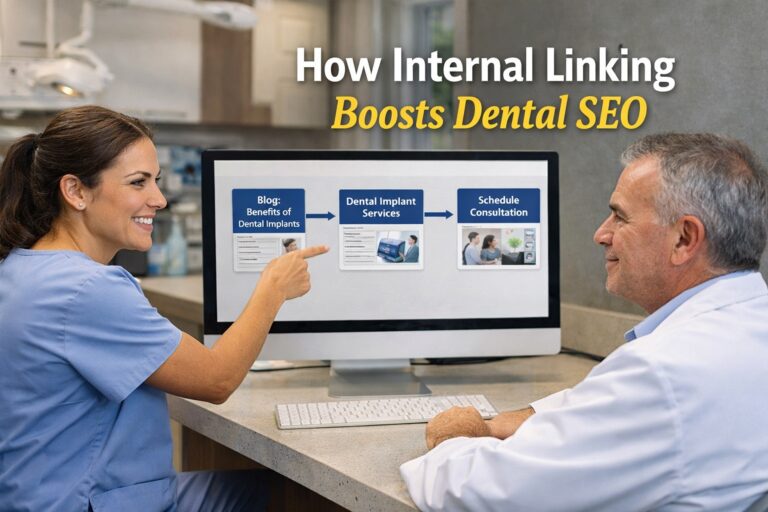
Internal linking improves dental SEO by strengthening your website’s structure, increasing visibility in search results, and guiding potential implant patients toward conversion. For dental implant practices, this directly impacts patient acquisition, case acceptance, and overall revenue growth.
Many implant dentists struggle with low case volume, inconsistent leads, and websites that fail to convert visitors into consultations. Internal linking is one of the most overlooked yet powerful strategies to fix these issues. When implemented correctly, it helps search engines understand your content while guiding patients through a clear path from discovery to booking.
What Internal Linking Means for Dental Implant Practices
Internal linking refers to linking one page of your website to another page within the same domain. For implant practices, this is not just about navigation. It is about building a strategic pathway that moves patients toward high-value procedures like full arch implants or All-on-4 treatments.
A well-structured internal linking system helps:
- Improve rankings for high-intent implant keywords
- Increase time spent on your website
- Reduce bounce rates
- Guide patients toward consultation pages
- Strengthen authority of key implant service pages
Without internal linking, even the best content can remain invisible or underperform.
Why Internal Linking Directly Impacts Patient Acquisition
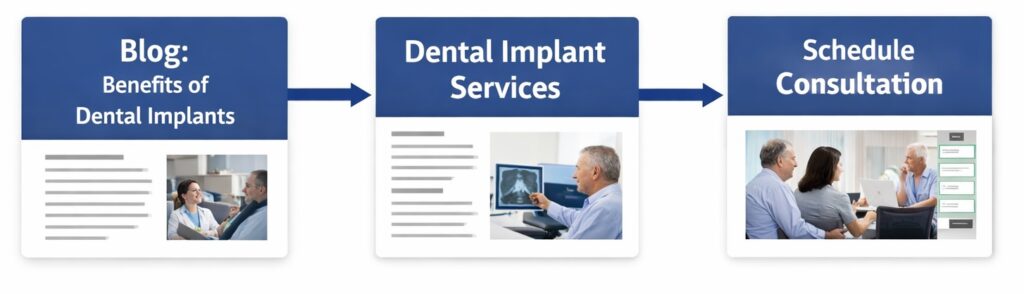
Search engines prioritize websites that demonstrate clear structure and topical authority. Internal linking signals that your site is organized, relevant, and comprehensive.
For implant dentists, this means:
- Your implant service pages rank higher
- Your blog content supports your revenue-driving pages
- Patients find answers faster and stay longer
When a potential patient searches for dental implants, they often explore multiple pages before making a decision. Internal links keep them engaged and move them closer to booking.
How Internal Linking Builds Topical Authority for Implant SEO
Topical authority is critical for ranking in competitive implant-related searches. Internal linking helps search engines connect related content across your site.
Example of a Strong Internal Linking Structure
A well-optimized implant website might connect:
- Blog post about implant benefits
- Page about full arch dental implants
- Financing page
- Consultation booking page
Each page supports the others.
When you link content strategically, Google understands that your site is an authority on dental implants. This improves rankings across multiple keywords, not just one page.
For example, linking to dental implant SEO from educational content reinforces relevance and helps that page rank higher.
Internal Linking Improves Website Conversion Rates
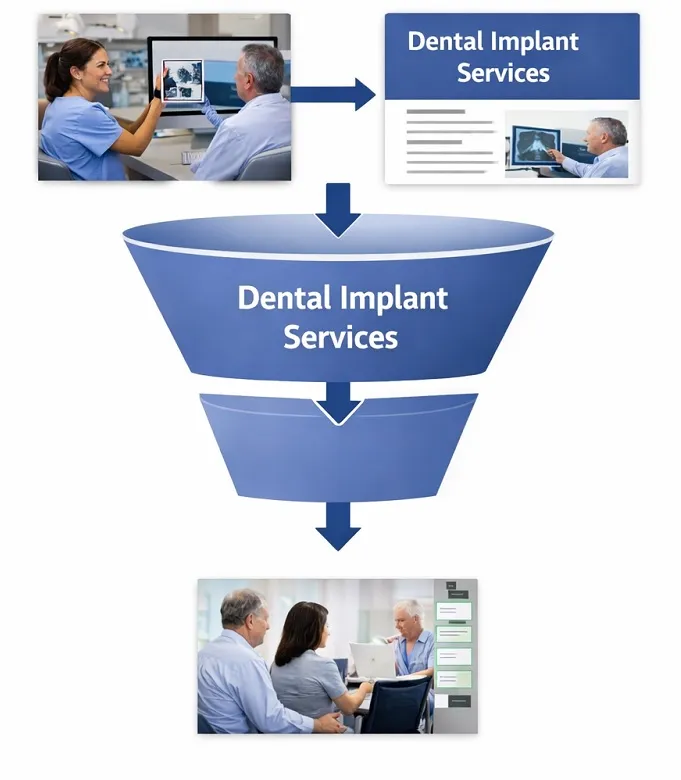
Most dental websites lose patients because they do not guide users effectively. Patients land on a page and leave without taking action.
Internal linking fixes this by creating a clear journey.
How It Improves Conversions
- Directs patients to high-value treatment pages
- Reinforces trust through educational content
- Reduces confusion by guiding next steps
- Keeps users engaged longer
For example, a blog about “implant vs dentures” should link directly to your implant consultation page and your dental implant website design page to reinforce credibility.
Strategic Internal Linking for Implant Service Pages
Your implant service pages are your most valuable assets. Internal linking should prioritize driving traffic to these pages.
Best Practices
- Link to implant service pages from all relevant blog posts
- Use descriptive anchor text like dental implant SEO
- Avoid generic phrases like “click here”
- Ensure links are contextually relevant
Example Structure
From a blog about bone grafting:
- Link to implant procedure page
- Link to consultation page
- Link to financing options
This ensures every visitor has a clear next step.
Anchor Text Optimization for Dental SEO
Anchor text is the clickable text used in a link. It plays a major role in SEO performance.
What Works Best
- Use keyword-rich phrases
- Keep it natural and readable
- Match search intent
Examples:
- dental implant website design
- local SEO for implant dentists
- implant lead generation strategies
These signals help search engines understand what the linked page is about.
What to Avoid
- Over-optimization with repeated exact keywords
- Generic anchor text
- Irrelevant links
Proper anchor text improves rankings while enhancing user experience.
Internal Linking and Local SEO for Implant Dentists
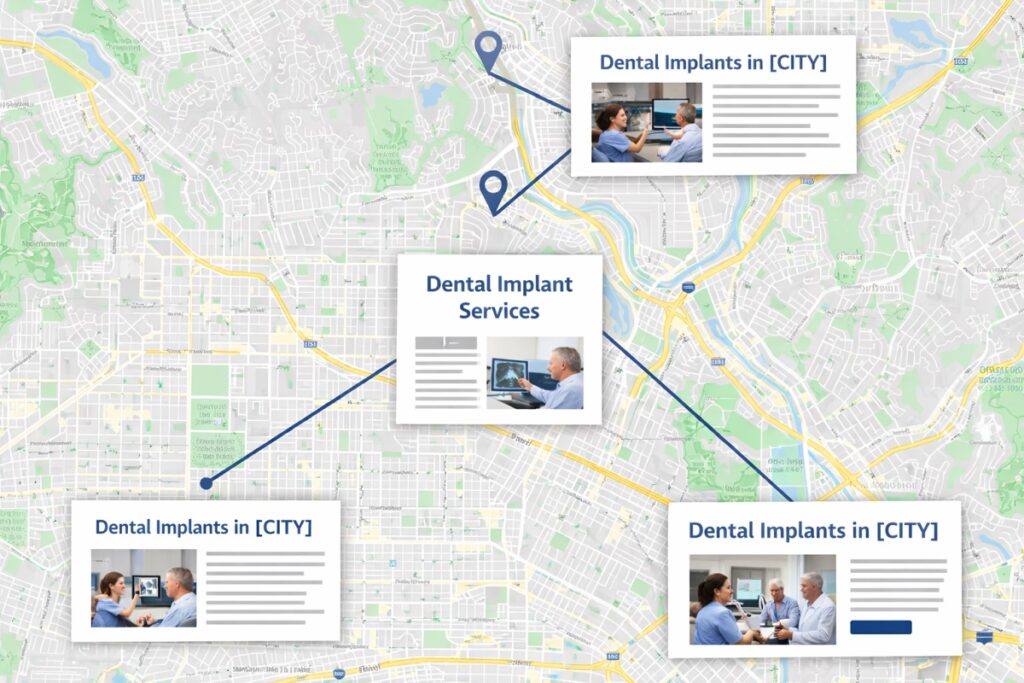
Local SEO is essential for implant practices that rely on geographic targeting. Internal linking strengthens your local relevance.
When you connect pages that mention locations, services, and patient outcomes, search engines better understand your service area.
For example:
- Link blog content to local SEO for implant dentists
- Connect city-specific pages to implant services
- Reinforce geographic keywords across pages
This increases your chances of ranking in local searches like “dental implants near me.”
Using Internal Links to Support Lead Generation Systems
Internal linking is not just about SEO. It is a core part of your lead generation strategy.
Every page should contribute to generating implant consultations.
How to Structure for Lead Flow
- Blog posts link to implant lead generation strategies
- Service pages link to consultation forms
- Case studies link to booking pages
- FAQ pages link to financing and scheduling
This creates a system where every piece of content supports patient acquisition.
If your website lacks this structure, you are likely losing high-value implant cases.
Internal Linking for Case Acceptance Improvement
Patients rarely book implants on their first visit. They need education, reassurance, and trust.
Internal linking supports this process.
How It Helps Case Acceptance
- Guides patients through educational content
- Reinforces benefits of implants
- Addresses objections like cost or recovery
- Builds confidence before consultation
For example, a patient reading about implant longevity should be guided to:
- Before and after cases
- Financing options
- Consultation booking
This increases the likelihood of case acceptance once they visit your office.
Common Internal Linking Mistakes Implant Practices Make
Many dental websites fail to see results because of poor internal linking strategies.
Most Common Issues
- No linking strategy at all
- Too few links between pages
- Linking only in navigation menus
- Ignoring blog-to-service connections
- Using weak or generic anchor text
These mistakes limit both SEO performance and conversions.
Fixing These Issues
- Audit your current website structure
- Identify key implant pages
- Build links from all supporting content
- Ensure every page has a clear next step
How Internal Linking Supports Website Performance
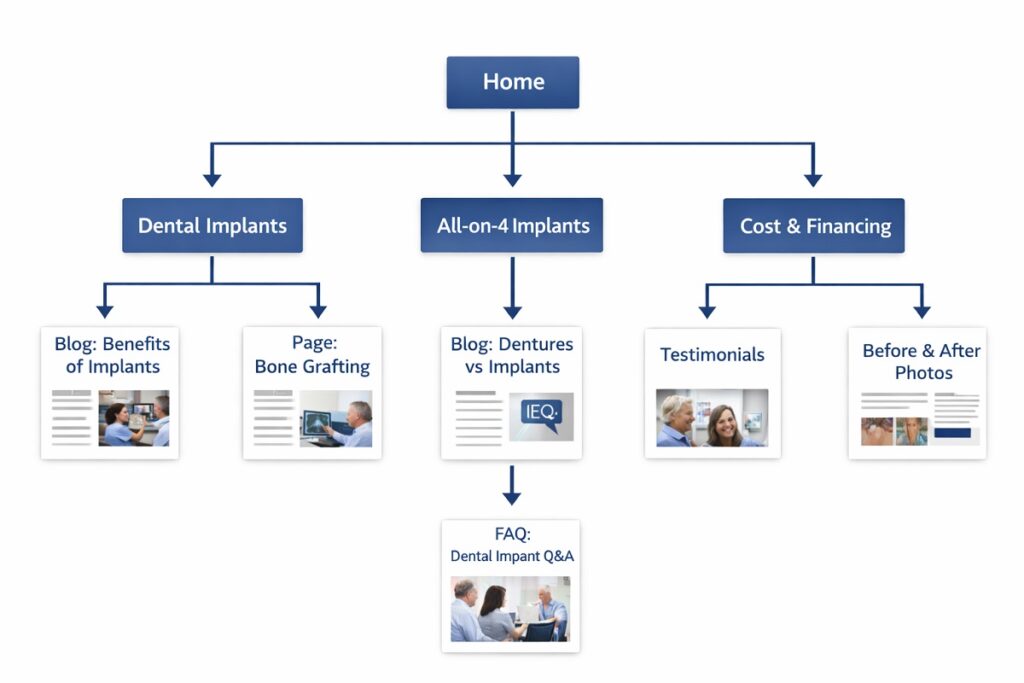
Internal linking improves technical performance by helping search engines crawl your site more efficiently.
Benefits
- Faster indexing of new content
- Better distribution of page authority
- Stronger overall site structure
When combined with strong dental implant website design, internal linking ensures your site performs at a high level both technically and strategically.
Internal Linking and Content Strategy for Implant SEO
Your content strategy should be built around internal linking from the start.
Content Types That Work Best
- Implant education blogs
- Procedure explanations
- Cost and financing pages
- Patient testimonials
- FAQs
Each piece should connect to others in a logical way.
Example Content Flow
- Blog post about implant benefits
- Link to full arch implant page
- Link to financing page
- Link to consultation booking
This creates a seamless journey from awareness to action.
How Implant Dentists Can Improve Their Marketing
To maximize results from internal linking, implant dentists need a structured marketing approach.
Key Steps
- Build a high-performance website focused on conversions
- Implement a strong dental implant SEO strategy
- Optimize for local visibility with local SEO for implant dentists
- Create consistent content that supports implant services
- Develop clear implant lead generation strategies
- Use systems like reputation follow-up to reinforce trust
Internal linking ties all of these elements together. Without it, even strong marketing efforts can underperform.
Practices that invest in structured SEO and website strategy see more consistent leads, higher-quality patients, and increased implant case volume.
Ready to Grow Your Dental Implant Practice?
If your website is not generating consistent implant cases, your internal linking strategy may be part of the problem.
Parrot Branding specializes in helping implant dentists build high-performing websites, improve SEO rankings, and generate predictable patient flow.
Request a consultation here:
Content reviewed and published by Parrot Branding Editorial Team.