
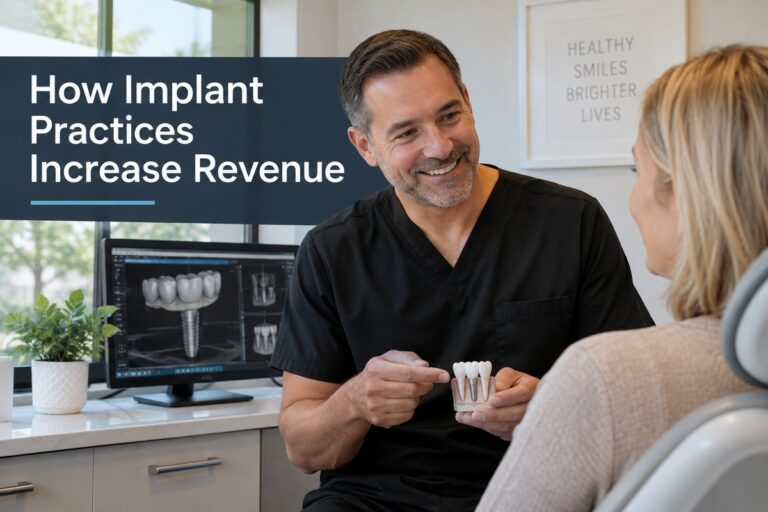
How implant practices increase revenue comes down to attracting more qualified implant patients, improving case acceptance, maximizing the value of each opportunity, and building a marketing system that consistently produces high-value cases. Dental implants are among the highest-value services a dental practice can provide, but strong clinical demand alone does not guarantee predictable revenue.
Successful implant practices pay close attention to the entire patient journey, from the first Google search to the consultation, treatment presentation, financing conversation, and follow-up. Improving each stage can increase dental implant revenue without requiring the practice to dramatically increase patient volume.
Attract More High-Value Dental Implant Patients
Revenue growth starts with attracting patients who are actively considering implant treatment. A practice can generate large amounts of website traffic without seeing meaningful revenue growth if most visitors have little interest in high-value procedures.
Dental implant marketing should focus on searches that indicate genuine treatment intent. Someone researching dental implant costs, full-mouth dental implants, All-on-4 treatment, implant-supported dentures, or alternatives to dentures may be considerably closer to scheduling a consultation than someone performing a general dental search.
Focus SEO on High-Intent Implant Searches
Dental implant SEO can help a practice appear when prospective patients are actively researching treatment.
Useful keyword themes can include:
- Dental implants in the practice’s city or service area
- Dental implant dentist
- Dental implant cost
- Full-mouth dental implants
- Full-arch dental implants
- All-on-4 dental implants
- Implant-supported dentures
- Permanent teeth replacement
- Missing teeth replacement options
- Same-day dental implants, when offered by the practice
The objective is not simply to rank for as many dental keywords as possible. Implant practices can generate greater revenue by ranking for searches connected to procedures they want to perform and patients who are closer to making a treatment decision.
Build a Dental Implant Website Around Conversions
A dental implant website should do more than describe services. It should help turn prospective implant patients into consultation requests.
Patients considering implants often have significant questions about treatment, recovery, candidacy, financing, longevity, and cost. If the website makes those answers difficult to find, potential patients may continue researching competitors.
Strong dental implant websites make the next step obvious while giving patients enough information to feel comfortable contacting the practice.
Create Dedicated Pages for High-Value Implant Procedures
Rather than placing every implant service on one general page, practices can create dedicated pages for their major treatments.
For example, separate pages may be appropriate for full-mouth dental implants, single-tooth implants, implant-supported dentures, full-arch treatment, and All-on-4 treatment when those services are available.
Dedicated service pages provide more room to address patient questions while also creating opportunities to rank for specific dental implant keywords.
Each page should guide the prospective patient toward a clear action, such as requesting a consultation or calling the office.
Increase Dental Implant Consultation Volume
More qualified consultations create more opportunities to produce implant revenue. This makes consultation generation one of the most important numbers for an implant practice to monitor.
Website visitors should never have to search for a way to contact the practice. Phone numbers, consultation forms, and calls to action should be easy to find, especially on implant treatment pages.
Reducing friction can also improve conversion rates. Long forms that request unnecessary information may discourage prospective patients from completing them. A shorter initial form can collect the information needed for the team to begin the conversation.
Respond to Implant Leads Quickly
Generating a dental implant lead is only the first step. How the practice handles that lead can have a direct effect on revenue.
Patients frequently contact several practices while researching treatment. A lead that sits unanswered for hours or days may schedule somewhere else.
Practices can strengthen lead handling by:
- Establishing a clear process for responding to new inquiries
- Assigning responsibility for implant leads
- Attempting multiple follow-ups when appropriate
- Tracking whether each inquiry schedules
- Recording common reasons patients do not move forward
- Making it easy for prospects to speak with someone who understands implant treatment
A better response process allows the practice to generate more value from the marketing investment it has already made.
Improve Implant Case Acceptance
A practice can attract plenty of implant consultations and still leave substantial revenue on the table if treatment acceptance is low.
Patients considering dental implants are often evaluating a significant financial and personal decision. Clinical expertise matters, but patients also need to understand their treatment options, expected outcomes, timeline, and financial choices.
Make Treatment Presentations Easier to Understand
Complicated terminology can make an already significant decision feel more difficult.
Treatment presentations should help patients clearly understand their current situation, the recommended solution, and what treatment is intended to accomplish.
Visuals, scans, photographs, models, and straightforward explanations can help patients understand the recommendation.
The objective is not to pressure patients into treatment. It is to eliminate unnecessary confusion that prevents qualified patients from confidently making a decision.
Discuss Financing Clearly
Affordability can be a major obstacle for implant patients, particularly for full-arch and full-mouth cases.
If financing options are available, they should not be treated as an afterthought. Patients should understand the available payment options and how those options affect the cost of proceeding with treatment.
Practices may benefit from:
- Explaining financing options during the consultation
- Training team members to discuss payment confidently
- Making payment information easy to understand
- Providing appropriate financing information on the website
- Avoiding vague answers when patients ask about cost
Clear financial conversations can help qualified patients determine whether treatment fits their circumstances.
Increase the Number of Full-Arch and Full-Mouth Cases
For implant practices that provide advanced restorative treatment, increasing qualified full-arch and full-mouth cases can have a substantial impact on production.
These cases typically carry higher treatment values than individual implant procedures, which means a relatively small increase in accepted cases can significantly affect monthly revenue.
Marketing should reflect this priority. If a practice wants more full-arch cases, its website, SEO strategy, advertising, patient education, and consultation process should all support that objective.
Create Content for Patients Comparing Major Treatment Options
High-value implant patients often spend considerable time researching before contacting a practice.
Useful content can address comparisons such as:
- Dental implants versus dentures
- Implant-supported dentures versus traditional dentures
- Full-mouth implants versus removable dentures
- Full-arch dental implants versus individual implants
- Treatment options for failing teeth
- Options for replacing an entire arch of teeth
This type of dental implant content can capture patients earlier in their research while building organic search visibility around commercially valuable topics.
Improve Local SEO for Dental Implant Searches
Many implant patients begin their search on Google, making local visibility an important revenue opportunity.
A practice that consistently appears for relevant implant searches in its target area has more opportunities to attract prospective patients without paying for every website visit.
Local dental SEO should support both the practice’s website and its visibility within local search results.
Strengthen Geographic Relevance
Practices should make it clear which communities they serve without creating repetitive or low-quality location content.
Service pages can naturally reference the primary city and surrounding service area where relevant. Practices serving multiple meaningful markets may also benefit from carefully developed location pages that contain useful, unique information.
The focus should remain on helping prospective patients, rather than inserting city names into every paragraph.
Generate More Revenue From Existing Website Traffic
Increasing website traffic is valuable, but it is not always the fastest path to additional revenue.
An implant practice receiving substantial organic or paid traffic may have a conversion problem rather than a traffic problem. Improving the percentage of visitors who request consultations can produce more leads without increasing advertising spend.
Remove Conversion Barriers
Review the website from the perspective of a prospective implant patient.
Common conversion barriers include:
- Difficult navigation
- Slow page loading
- Poor mobile usability
- Hidden contact information
- Weak calls to action
- Generic implant service pages
- Limited information about cost or financing
- Forms with too many required fields
- Lack of trust-building information
- Unclear explanations of treatment options
Even small conversion improvements can become financially meaningful when the practice is marketing high-value implant procedures.
Build Trust Before the Consultation
Prospective implant patients may compare several providers before deciding where to schedule.
A website should therefore demonstrate credibility before the patient ever contacts the office.
Relevant trust signals can include the dentist’s implant experience, advanced training, technology, treatment process, patient reviews, case information, and before-and-after examples when appropriate and permitted.
Use Patient Reviews Strategically
Reviews can be particularly valuable when they describe experiences related to implant treatment.
Prospective patients often want reassurance about more than the clinical result. They may want to know how they were treated, whether the process was explained clearly, how comfortable they felt, and whether they would choose the practice again.
Making authentic reviews visible throughout relevant implant pages can support both trust and conversion.
Track Revenue Back to Marketing Sources
An implant practice should know which marketing activities are actually producing consultations and accepted cases.
Traffic, impressions, clicks, and rankings are useful marketing metrics, but they do not provide a complete picture of business performance.
Practices should also pay attention to:
- Number of implant leads
- Cost per implant lead
- Consultation scheduling rate
- Consultation show rate
- Case acceptance rate
- Average accepted treatment value
- Revenue generated by marketing source
- Cost to acquire a new implant patient
These numbers help determine whether SEO, Google Ads, referrals, social media, or other marketing channels are producing valuable patients.
Measure Accepted Cases, Not Just Leads
Two marketing campaigns can each generate 20 inquiries and produce dramatically different financial results.
One campaign might generate low-quality inquiries that rarely schedule. Another might generate fewer leads but produce several accepted full-arch cases.
Looking only at lead volume can make the weaker campaign appear more successful.
Connecting marketing sources to scheduled consultations, accepted treatment, and revenue gives the practice a much clearer view of return on investment.
Reduce Lost Revenue From Unscheduled Leads
Not every prospective patient schedules immediately.
Some patients need additional time to research, arrange financing, speak with family members, or decide whether they are ready for treatment. Without an organized follow-up process, these opportunities can disappear.
Implant practices can create follow-up systems for qualified patients who inquire but do not immediately schedule.
The goal is to remain helpful and accessible rather than repeatedly pushing for an appointment.
Follow Up With Unaccepted Treatment
The same principle applies after consultations.
A patient who does not accept a treatment plan during the initial consultation is not necessarily a lost case. Some patients simply need more time.
Appropriate follow-up can answer remaining questions, revisit financing options, and give patients an easy way to continue the conversation.
When the value of a single implant case can be substantial, improving follow-up can produce meaningful additional revenue.
Improve the Value of Every Marketing Dollar
Increasing dental implant practice revenue does not always require increasing the marketing budget.
Before spending more, practices should determine whether their existing traffic and leads are being handled effectively.
A stronger dental implant website can improve conversion rates. Better SEO can attract more qualified searches. Faster lead response can increase consultations. Better treatment presentations can improve acceptance. Stronger follow-up can recover opportunities that would otherwise be lost.
These improvements compound.
If a practice attracts more qualified prospects and converts a higher percentage of those prospects at every stage, revenue can grow significantly even without a dramatic increase in overall lead volume.
Create a Revenue System Around the Implant Patient Journey
The strongest approach to implant practice growth connects marketing, patient communication, consultations, case acceptance, and follow-up instead of treating each as a separate activity.
A prospective patient may discover the practice through Google, read several dental implant pages, review patient experiences, investigate financing, submit a consultation request, speak with the team, attend a consultation, and eventually accept treatment.
Revenue can be lost at any one of those stages.
Practices that want to increase dental implant revenue should identify where qualified patients are dropping out and improve those points systematically. That may mean better dental implant SEO, a higher-converting implant website, stronger lead management, clearer financial discussions, more effective consultation processes, or better follow-up.
Increasing revenue is ultimately about generating more value from the entire patient acquisition process. When an implant practice attracts the right patients, gives them the information they need, responds efficiently, and makes the path to treatment clear, marketing becomes more than a source of traffic. It becomes a measurable system for producing qualified consultations, accepted implant cases, and sustainable practice revenue.
Content reviewed and published by Parrot Branding Editorial Team.