
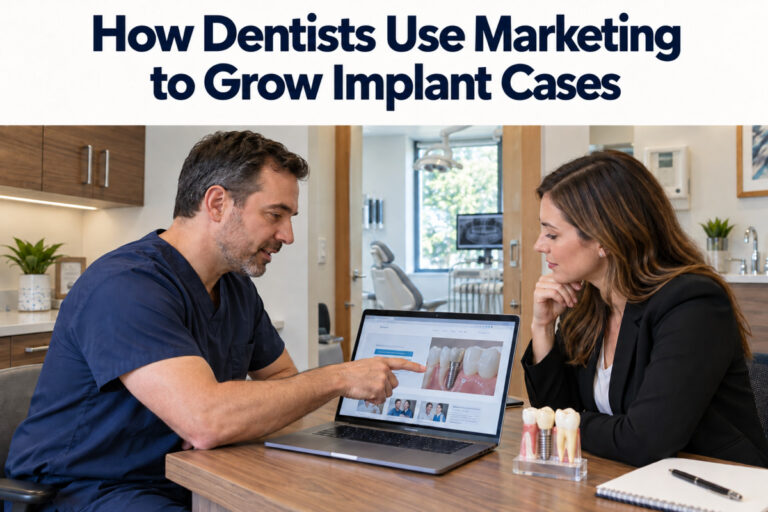
How dentists use marketing to grow implant cases depends on connecting patient interest with clear information, a trustworthy website, and a team prepared to turn inquiries into consultations. Dental implant marketing works best when every step helps prospective patients understand their options and feel comfortable contacting the practice.
For hiring managers and HR professionals in dental organizations, this process also has a staffing dimension. Marketing creates opportunities, but reception coverage, treatment coordination, and appointment availability affect how many opportunities become scheduled cases.
A practical strategy combines dental implant SEO, targeted advertising, patient education, and consistent follow-up. Here is how practices can bring those elements together.
Use Patient Demand to Shape Implant Marketing
Patients researching dental implants have different concerns. Someone replacing one missing tooth may prioritize appearance and cost. Someone struggling with dentures may want to understand stability, daily comfort, and full-arch treatment options.
Marketing becomes more useful when it addresses those specific concerns instead of repeating broad claims about better smiles.
Tooth Loss Data Shows the Need for Relevant Information
The CDC’s 2024 Oral Health Surveillance Report reports complete tooth loss among 11.4% of adults ages 65 to 74 and 19.7% of adults ages 75 and older. These figures describe tooth loss, rather than implant eligibility or purchasing intent.
For dental practices, this supports creating clear information for people comparing tooth replacement options. However, national statistics should not substitute for understanding local demand.
Review questions from patient calls, consultation requests, and website searches. Use those findings to identify which concerns deserve more attention:
- Replacing a single missing tooth.
- Comparing dentures with implant-supported options.
- Understanding full-mouth dental implant costs.
- Planning appointments around work and family responsibilities.
- Learning what happens during an implant consultation.
Build Dental Implant Website Pages That Encourage Inquiries
A prospective patient should quickly understand what the practice offers, who provides treatment, and how to request an appointment.
Sending every visitor to a general dentistry homepage makes that process harder. Dedicated implant pages give patients a direct path to relevant information.
Match Each Page to a Specific Patient Need
Create distinct pages for services the practice actually provides, such as single-tooth implants, implant-supported dentures, and full-arch dental implants.
Each page should answer practical questions:
- Who will evaluate the patient?
- What does the initial consultation include?
- Which factors affect the treatment plan and price?
- What payment options can patients discuss?
- How can someone request an appointment?
Explain the dentist’s relevant training and experience accurately. Use real practice photography and clear descriptions of the consultation process to make the experience more familiar.
Professional dental implant website design should make this information easy to find on both phones and desktop computers.
Make Contact Simple
Place a clear consultation button near the top of important pages and repeat it where readers naturally finish reviewing information.
Keep initial inquiry forms short. Request basic contact details and a preferred contact method, then collect detailed clinical information through the practice’s appropriate intake process.
State whether the form requests a callback or reserves an appointment. That small distinction helps prevent confusion and missed expectations.
Use Dental Implant SEO to Reach Local Patients
Dental implant SEO should connect the practice with people searching for relevant treatment in its service area.
Useful keyword themes include “dental implants in [city],” “implant dentist in [city],” “implant-supported dentures,” and “full-mouth dental implants cost.” Choose terms that accurately match the practice’s services.
Create Helpful Content Around Search Intent
Different searches call for different pages. A person comparing costs needs an explanation of pricing factors. Someone searching for a nearby implant dentist needs location information, provider details, and an appointment pathway.
Build content around those needs rather than repeating the same keyword across every paragraph.
A focused dental implant SEO strategy can connect educational articles to relevant service pages through descriptive internal links. For example, an article about denture stability can link to the practice’s implant-supported denture page.
Have the treating dentist review clinical content for accuracy before publication.
Strengthen Local Visibility
According to Google’s local ranking guidance, local results depend primarily on relevance, distance, and prominence. Google also recommends complete, accurate business information and notes that reviews and positive ratings can help local rankings.
Practical priorities include:
- Maintaining accurate contact details and office hours.
- Selecting business categories that reflect the practice.
- Adding current office and team photographs.
- Describing available services accurately.
- Requesting honest patient feedback consistently.
For practices with multiple offices, create useful location pages with specific staff, services, directions, and contact information.
Run Paid Search Campaigns Around Consultation Intent
Paid search can put implant services in front of people actively researching treatment. However, campaign performance depends on what happens after the click.
Separate campaigns or ad groups by treatment interest when the budget supports it. Single-tooth implant searches and full-arch searches may require different messages, landing pages, and consultation conversations.
Keep Ads and Landing Pages Consistent
An ad discussing implant-supported dentures should lead to a page about that service. If an ad mentions a consultation offer, the landing page should explain its terms clearly.
Review search terms regularly to identify irrelevant traffic, such as employment searches or professional training queries. Adjust targeting and exclusions based on actual results.
Evaluate campaigns by attended consultations and treatment starts alongside inquiries. A campaign producing inexpensive leads may still perform poorly if few people attend an appointment.
Address Cost Questions Before They Become Barriers
Patients should not have to contact the practice simply to discover whether anyone will discuss pricing openly.
Explain what influences dental implant costs and what an estimate includes. Depending on the treatment, patients may need clarification about imaging, extractions, provisional teeth, final restorations, and follow-up appointments.
Make Financial Conversations Easier
Website content and staff explanations should use consistent language. If the practice advertises a starting price, clearly explain the scope and possible additional costs.
Useful information includes:
- Why treatment plans differ between patients.
- When the practice provides an individualized estimate.
- Which payment arrangements are available.
- Whether financing requires approval.
- Who can answer billing and insurance questions.
Avoid presenting a monthly payment without the conditions needed to understand it. Clear expectations help prospective patients prepare for a productive consultation.
Build Trust With Patient Experiences and Clear Expectations
Patient stories can help people understand the experience of seeking implant treatment.
Useful testimonials discuss communication, appointment preparation, and the support patients received. Before-and-after images should include context and appropriate patient permission.
Answer the Questions Patients Hesitate to Ask
Short videos and articles can address concerns such as:
- What happens at the first appointment?
- Can someone bring a family member?
- How does the dentist assess treatment options?
- Who explains the proposed costs?
- How are questions handled after the consultation?
Keep explanations realistic. Avoid promises that every patient will qualify for the same treatment, timeline, or outcome.
Support Marketing With Effective Hiring and Patient Coordination
For dental hiring managers and HR teams, implant case growth depends partly on having enough staff to respond well to demand.
A successful campaign can expose gaps in phone coverage, scheduling, or follow-up. Before increasing spending, confirm that the practice can manage additional inquiries and consultation appointments.
Hire for Communication and Follow-Through
Patient-facing employees need empathy, organization, and the ability to explain the next step clearly.
During interviews, use realistic scenarios. Ask candidates how they would respond to someone worried about cost, uncertain about treatment, or frustrated by a previous dental experience.
Evaluate whether they listen carefully, avoid unsupported promises, and know when to involve a clinician.
Assign Ownership of Every Inquiry
Give each new inquiry a clear owner. Establish a practical response target during business hours and a process for handling after-hours requests.
Track whether the team reached the patient, scheduled an appointment, or needs to follow up. Use the patient’s preferred communication method and respect requests to stop contact.
This makes marketing opportunities easier to manage and helps managers identify whether staffing constraints are limiting growth.
Measure Implant Marketing Through Treatment Starts
Website traffic and search visibility provide useful context, but they do not show the complete business result.
Track the patient journey from inquiry through consultation and treatment. Keep definitions consistent so marketing and practice teams interpret reports the same way.
Monitor the Metrics That Reveal Missed Opportunities
A useful dashboard includes:
- Inquiry-to-booking rate: Booked consultations divided by inquiries.
- Attendance rate: Attended consultations divided by booked consultations.
- Case acceptance rate: Accepted plans divided by plans presented.
- Treatment start rate: Started cases divided by accepted plans.
- Marketing cost per started case: Attributed marketing spend divided by attributed treatment starts.
Review results by lead source and inquiry month. Patients may take time to decide, so comparing this month’s spending only with this month’s starts can distort performance.
Example: Improving Bookings Without Buying More Leads
Consider an illustrative practice receiving 100 implant inquiries. If 40 book consultations, 30 attend, and 10 start treatment, the practice converts 10% of inquiries into started cases.
If better follow-up produces 50 bookings, with attendance and treatment-start rates otherwise unchanged, the expected result would be roughly 12 or 13 starts. This is an example, not an industry benchmark or guaranteed result.
The exercise shows why practices should investigate missed calls and scheduling obstacles before assuming they need more advertising.
Dentists grow implant cases by making the entire patient journey easier to navigate. Relevant search visibility attracts interest, helpful website content answers questions, and a responsive team supports informed decisions.
At Parrot Branding, we create dental implant websites and SEO strategies that help practices improve visibility and attract consultation inquiries. Connecting that marketing foundation with effective patient coordination gives practices a clearer path from online interest to implant case growth.
Content reviewed and published by Parrot Branding Editorial Team.